-

502 Bad Gateway WordPress Error: Who Sent It and What Died (2026)
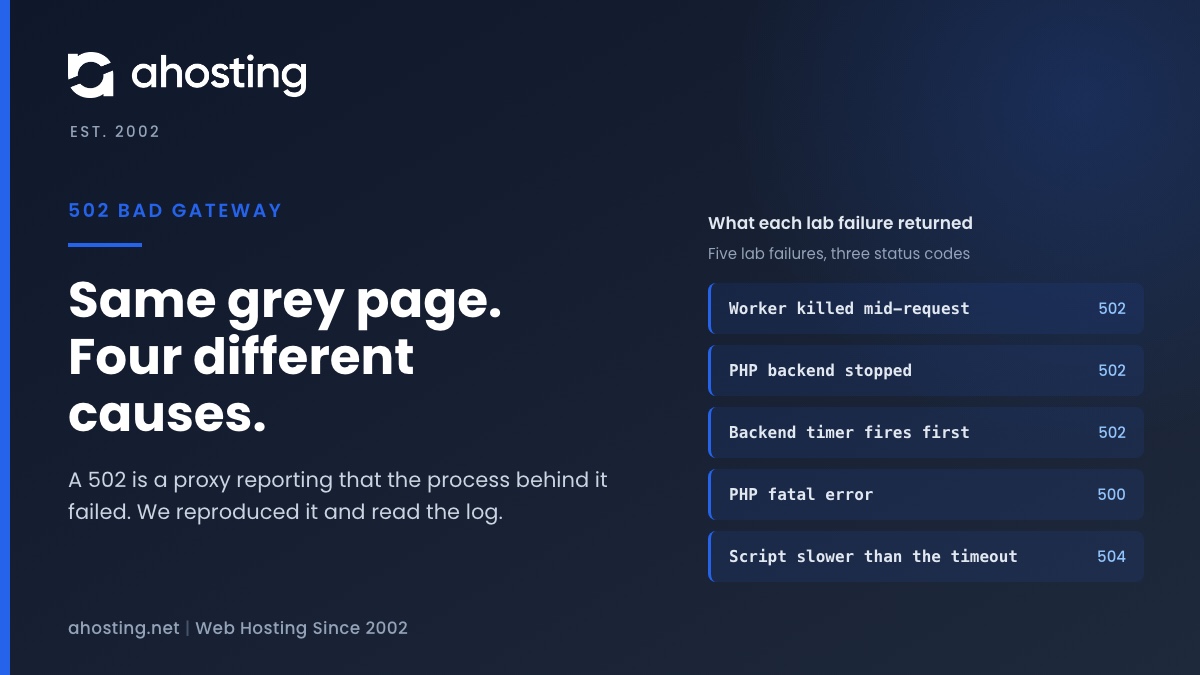
TL;DRA 502 bad gateway WordPress error is a proxy reporting that the process behind it died, vanished or sent a broken answer. Find out who sent it, then read the log line: a PHP fatal error is a 500, and a slow request is a 504.
Categories
- CMS
- Concrete5
- Drupal
- FFmpeg / Video Hosting
- Hosting Guides
- How To
- Joomla
- Security
- SEO
- Uncategorized
- Video Content
- Web Hosting News
- WooCommerce
- WordPress
Lets Connect!
-
Your Site Could Not Complete a Loopback Request: How to Read the Error and Fix It on Shared Hosting
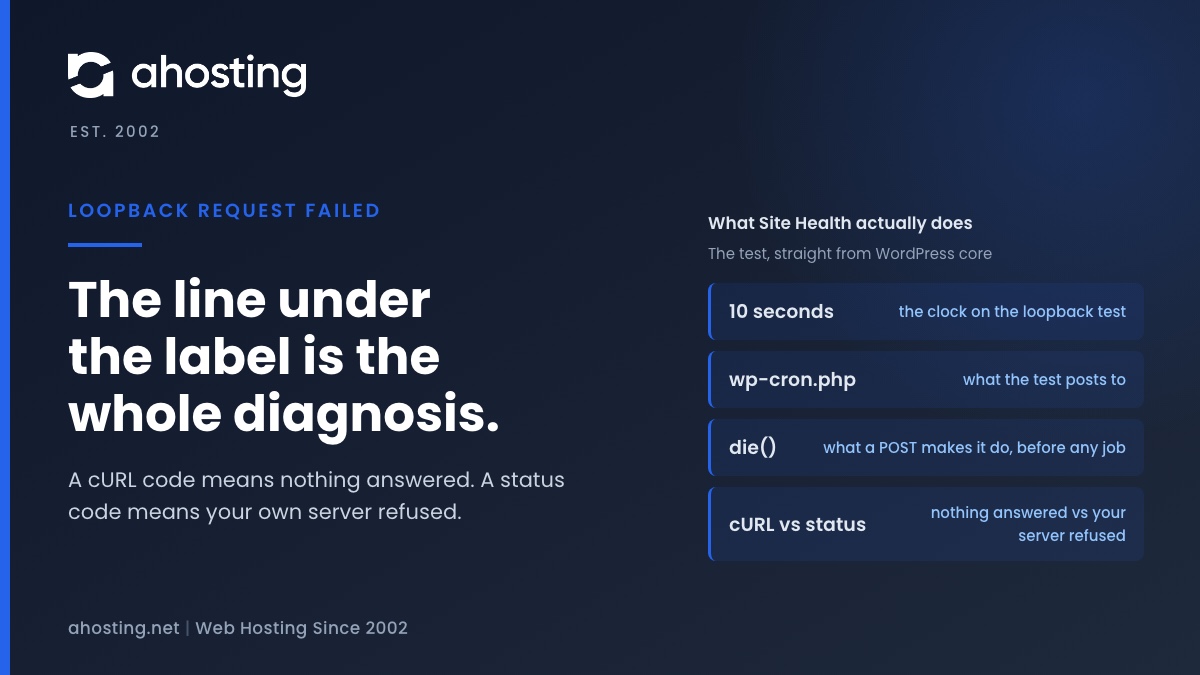
TL;DRA failed loopback request means WordPress could not reach its own wp-cron.php with a ten-second POST. The code printed under the label is the diagnosis: a cURL error means nothing answered (DNS, firewall, network), a status code means your own server refused (Cloudflare, ModSecurity, a deny rule, or the entry-process ceiling).
-
Autoloaded Options Could Affect Performance: How to Read the Site Health Warning and Clear It on Shared Hosting
TL;DRThe warning that autoloaded options could affect performance means WordPress now loads more than 800 KB of settings before it routes every uncached request. Cached pages never pay it; your admin, your checkout and every logged-in view pay it in full. Export the options table, clear expired transients, delete leftovers from removed plugins, then switch autoload off per large row — never wholesale.
-
Your Hosting Says 100% Full With 8 GB Free: How to Fix a WordPress Inode Limit
TL;DRAn inode limit counts files, not bytes, so an account can report itself full with most of its disk unused. Open cPanel and read the File Usage row in the Statistics panel against the Disk Usage row above it. If the file count is near its ceiling while storage is not, adding gigabytes fixes nothing — find the directory holding the files instead, and start with mail, cache and old backups.
-
Your Site Is Slow, CPU and Memory Are Fine: How to Tell If You’re Being Disk-I/O Throttled
TL;DRA disk I/O limit never returns an error. CloudLinux puts your processes to sleep, so the page still loads and simply takes longer, which is why CPU and memory look innocent. Open cPanel, go to Logs and then Resource Usage, and read the Faults column for the minutes the site was slow. Faults on the disk rows and none on the entry process row means you are throttled, not out of workers.