-

You Should Use a Persistent Object Cache: What WordPress Site Health Actually Measures
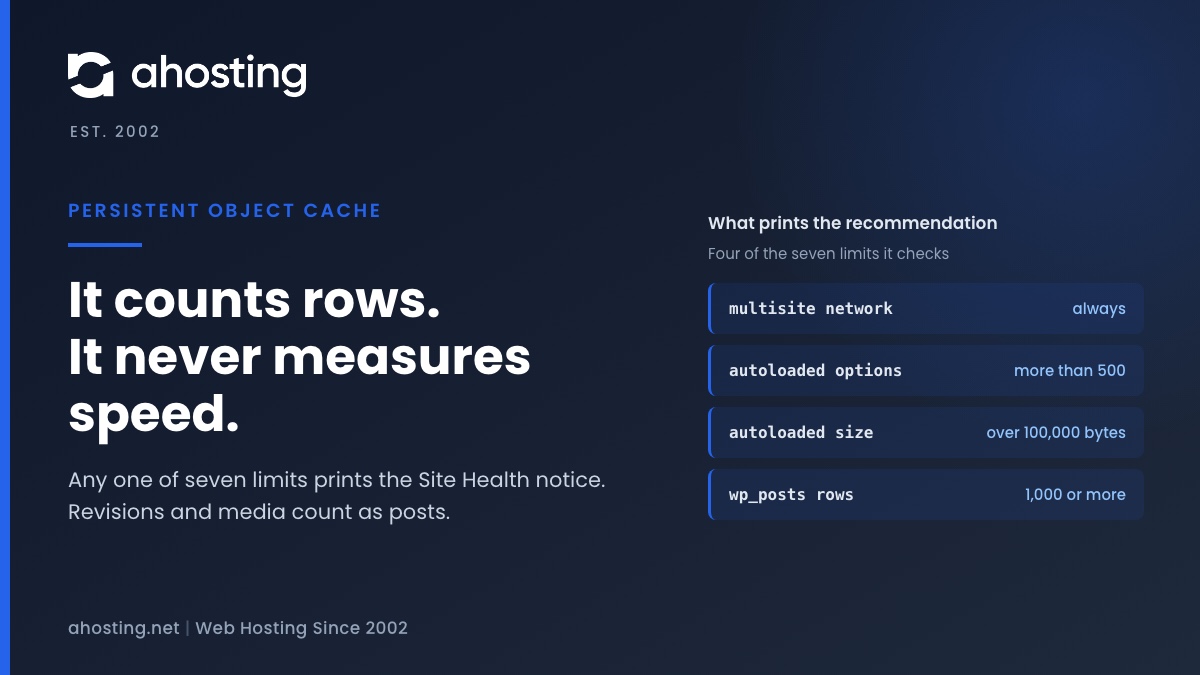
TL;DRSite Health recommends a persistent object cache when your site crosses a size line, not when it is slow. Any one of seven counters is enough: a multisite network, more than 500 autoloaded options or 100,000 bytes of them, or 1,000 rows in the posts, comments, options, terms or users table. Revisions and media count as posts, so small sites trip it often. An object cache also needs a cache server, and a plugin alone cannot provide one. Decide first whether your traffic is the kind an object cache speeds up.
Categories
- CMS
- Concrete5
- Drupal
- FFmpeg / Video Hosting
- Hosting Guides
- How To
- Joomla
- Security
- SEO
- Uncategorized
- Video Content
- Web Hosting News
- WooCommerce
- WordPress
Lets Connect!
-
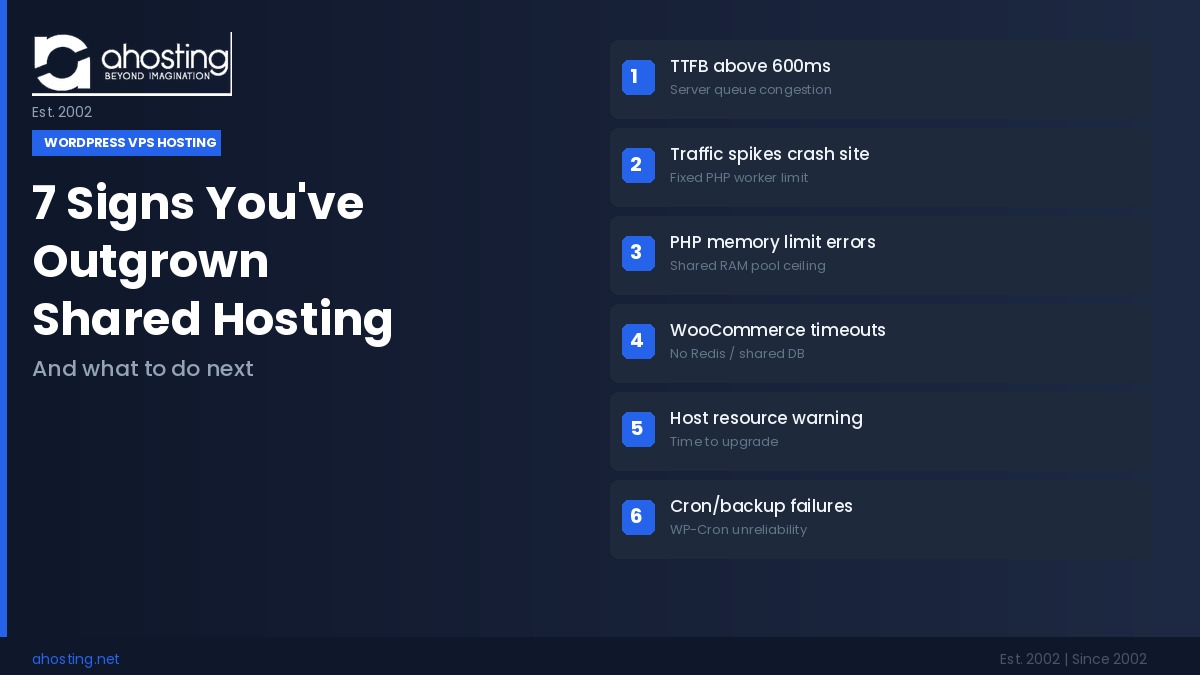
7 Signs Your WordPress Site Has Outgrown Shared Hosting (Is It Time for WordPress VPS Hosting?)
TL;DRWordPress VPS hosting gives your site guaranteed CPU, RAM, and SSD storage — the upgrade to consider when TTFB exceeds 600ms, traffic spikes crash your pages, PHP memory limits trigger repeatedly, WooCommerce checkout times out, or your host flags you for resource overuse. AHosting KVM VPS plans start at $8.79/month with a free dedicated IP included.
-
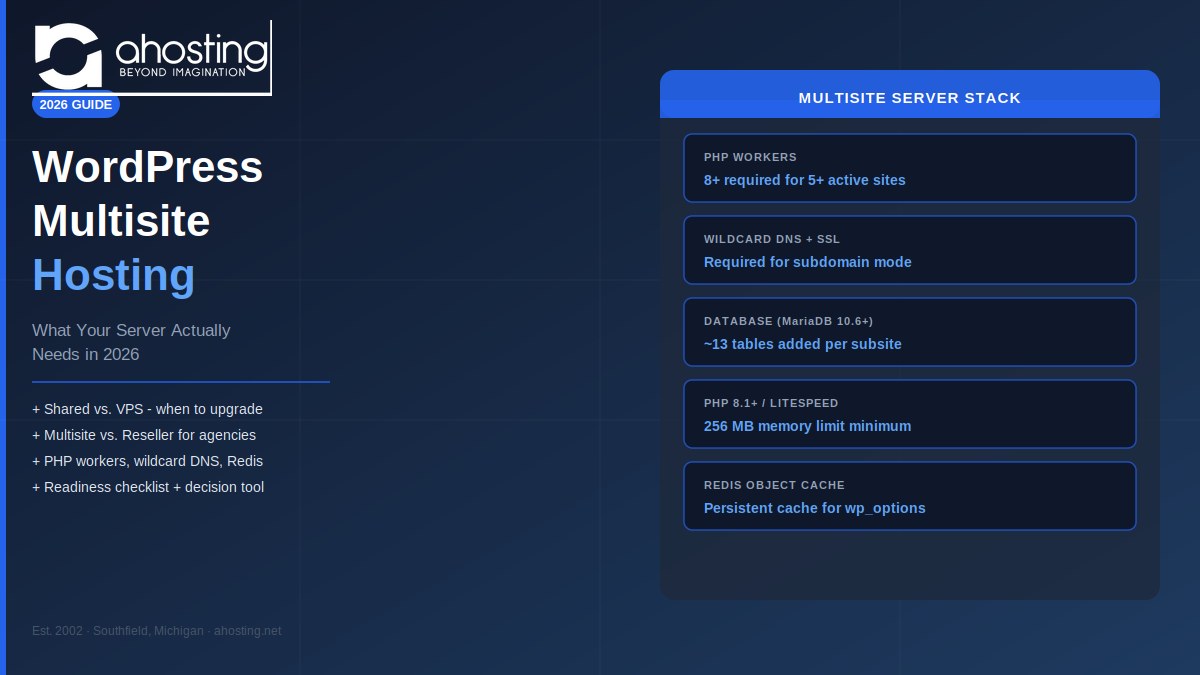
WordPress Multisite Hosting: What Your Server Actually Needs in 2026
TL;DRWordPress Multisite hosting requires wildcard DNS, adequate PHP workers, and a host that supports subdomain networks. Shared hosting works for small subdirectory networks but hits limits fast. At five or more active sites with real traffic, upgrade to a VPS — or switch to Reseller Hosting if you manage independent client sites that need full isolation.
-
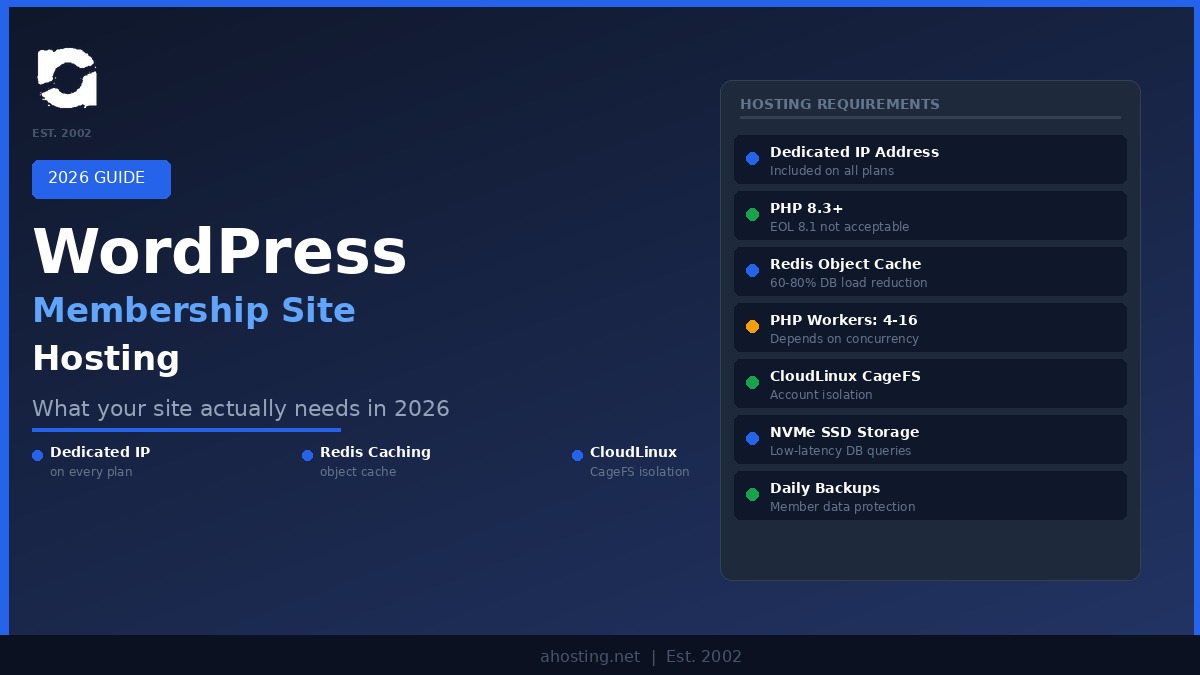
WordPress Membership Site Hosting: The 500-User Threshold You Need to Know
TL;DRWordPress membership site hosting must handle uncached logged-in traffic — something most shared hosts cannot do. In 2026, you need a dedicated IP address, at least 4 PHP workers, Redis object caching, and PHP 8.3+. AHosting WordPress plans include a dedicated IP on every plan, CloudLinux CageFS isolation, and the server stack membership sites actually require.
-
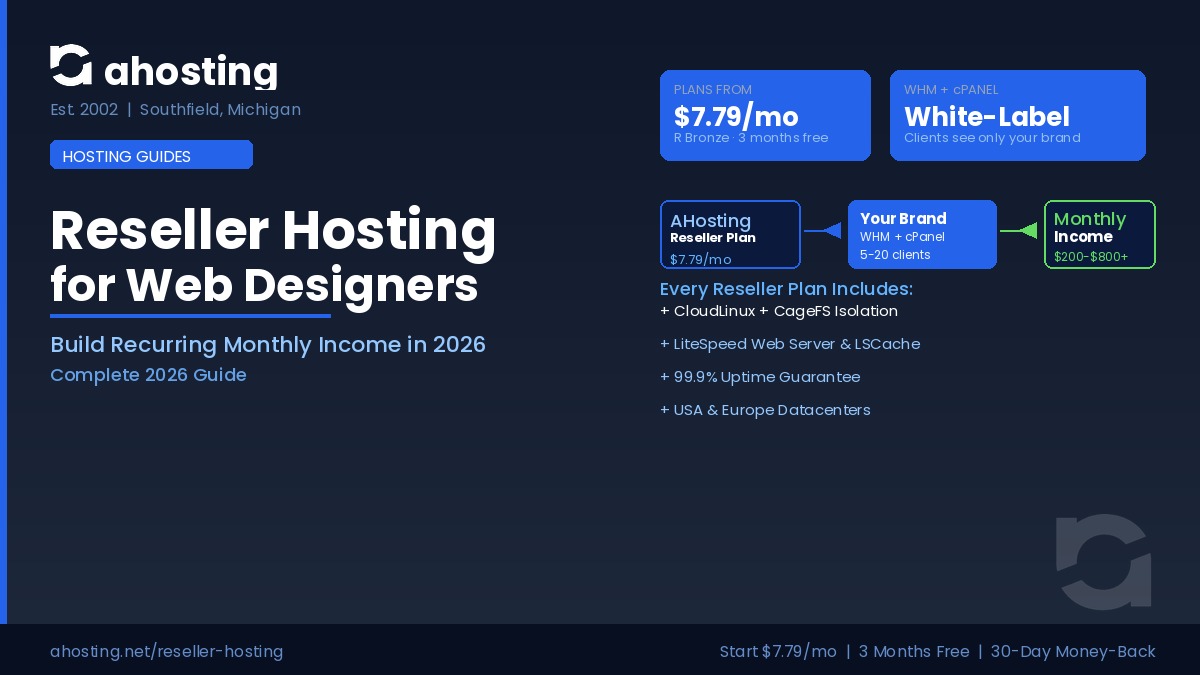
Reseller Hosting for Web Designers: Build Recurring Monthly Income in 2026
TL;DR
Reseller hosting for web designers lets you sell white-label WordPress hosting under your own brand via WHM and cPanel — AHosting’s plans start at $7.79/month with CloudLinux isolation, LiteSpeed speed, and free private nameservers so clients never see AHosting.