-

You Should Use a Persistent Object Cache: What WordPress Site Health Actually Measures
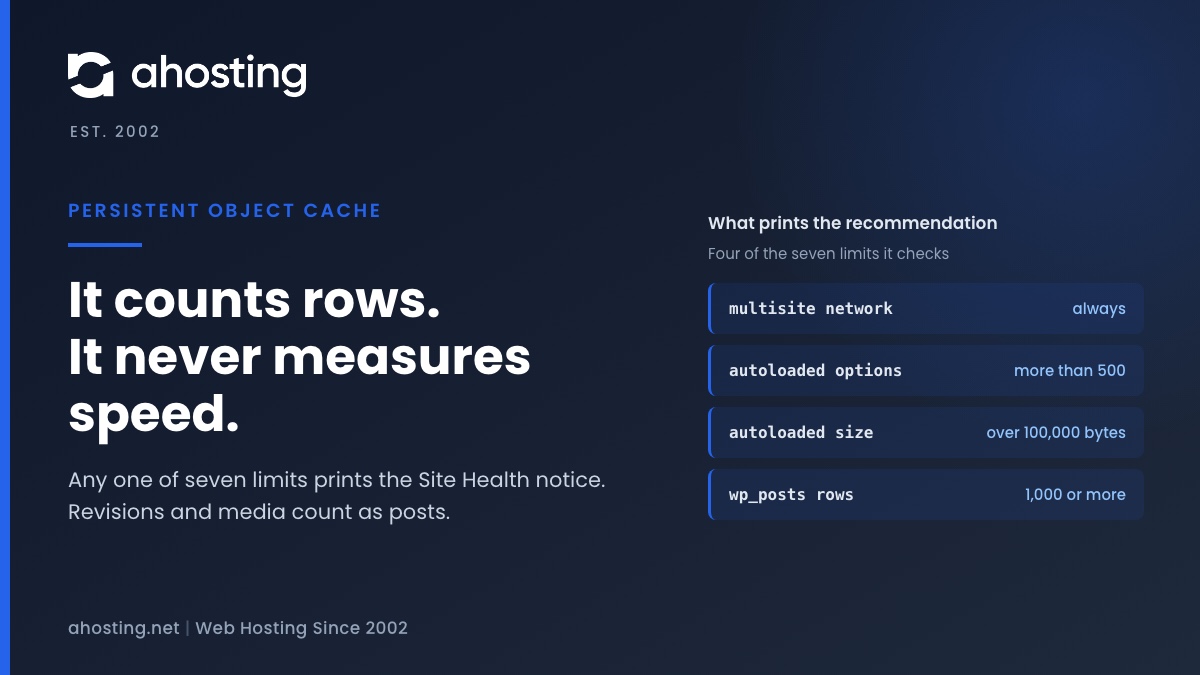
TL;DRSite Health recommends a persistent object cache when your site crosses a size line, not when it is slow. Any one of seven counters is enough: a multisite network, more than 500 autoloaded options or 100,000 bytes of them, or 1,000 rows in the posts, comments, options, terms or users table. Revisions and media count as posts, so small sites trip it often. An object cache also needs a cache server, and a plugin alone cannot provide one. Decide first whether your traffic is the kind an object cache speeds up.
Categories
- CMS
- Concrete5
- Drupal
- FFmpeg / Video Hosting
- Hosting Guides
- How To
- Joomla
- Security
- SEO
- Uncategorized
- Video Content
- Web Hosting News
- WooCommerce
- WordPress
Lets Connect!
-
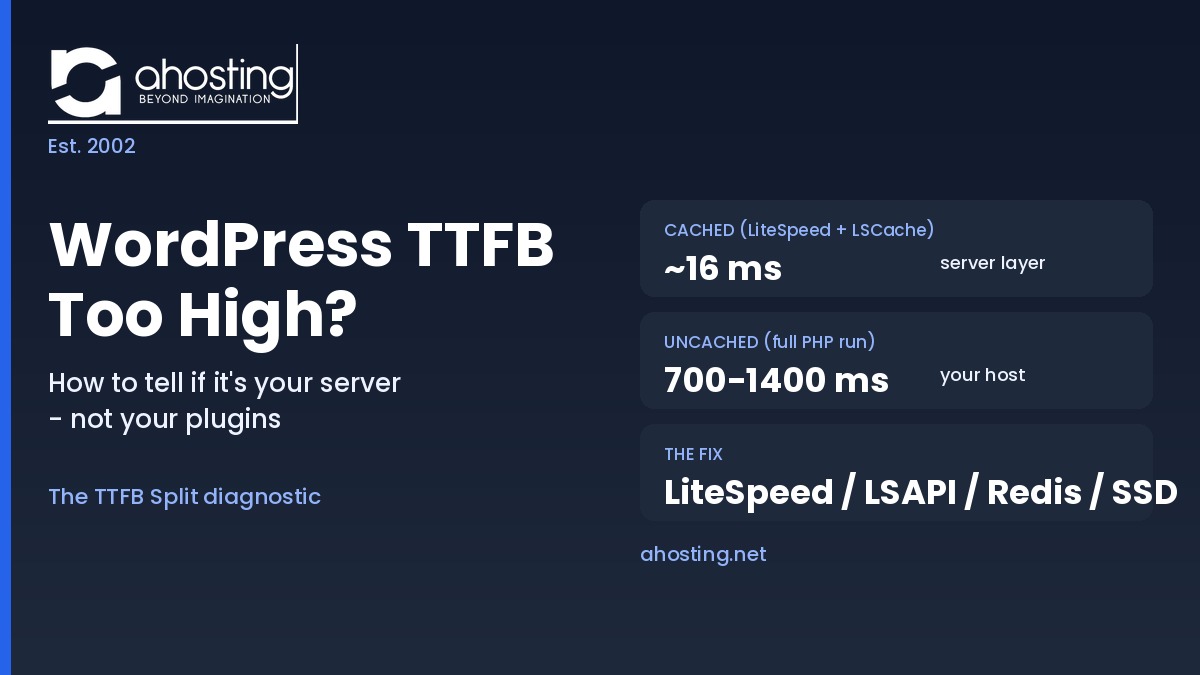
WordPress TTFB Too High? How to Tell If It’s Your Server (Not Your Plugins)
TL;DRTo reduce TTFB WordPress owners must first split the number: compare the same URL cached versus uncached. Low cached but high uncached TTFB is a server and PHP problem, not a plugin one, and LiteSpeed with LSCache fixes it at the server layer.
-
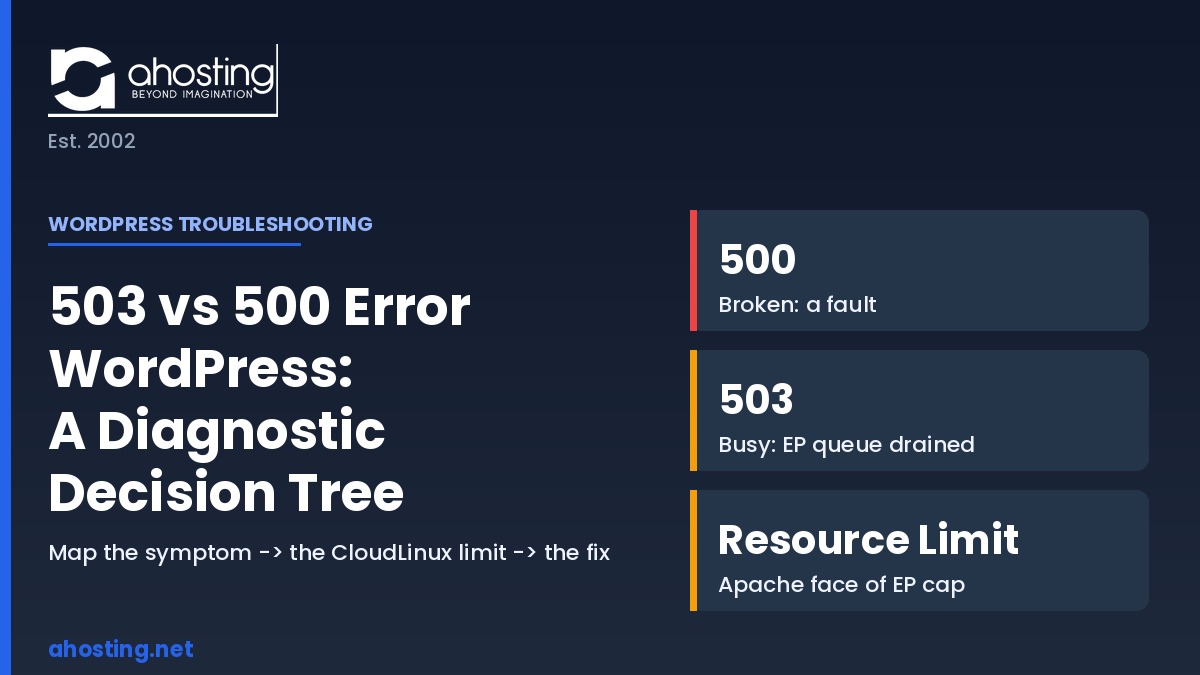
“Resource Limit Reached” vs. 503 vs. 500 Error WordPress: A Diagnostic Decision Tree
TL;DRThe 503 vs 500 error WordPress split is simple: 500 means broken (a fault), 503 means busy (a drained concurrency queue), and “Resource Limit Reached” is the entry-process ceiling. Map the symptom to the CloudLinux limit, then fix that limit.
-
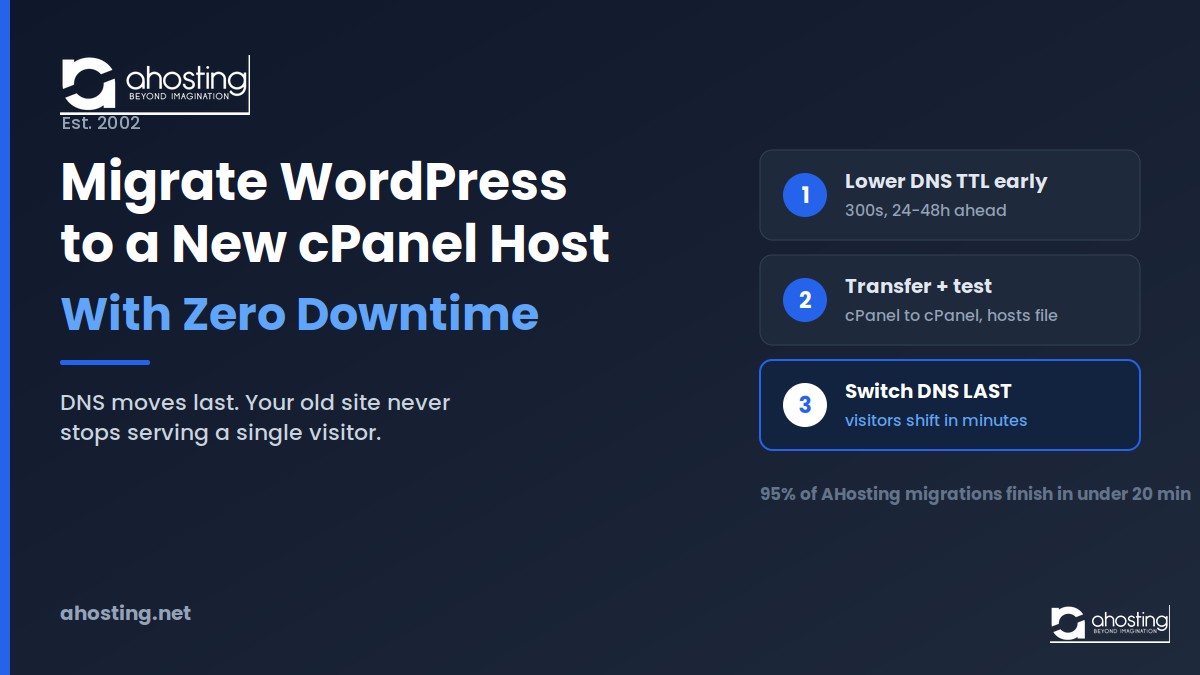
How to Migrate a WordPress Site to a New Host With Zero Downtime
TL;DRTo migrate WordPress to a new host with zero downtime, build and verify the full copy on the new cPanel server first, then switch DNS only after testing. The order of operations protects uptime, not the transfer tool.
-
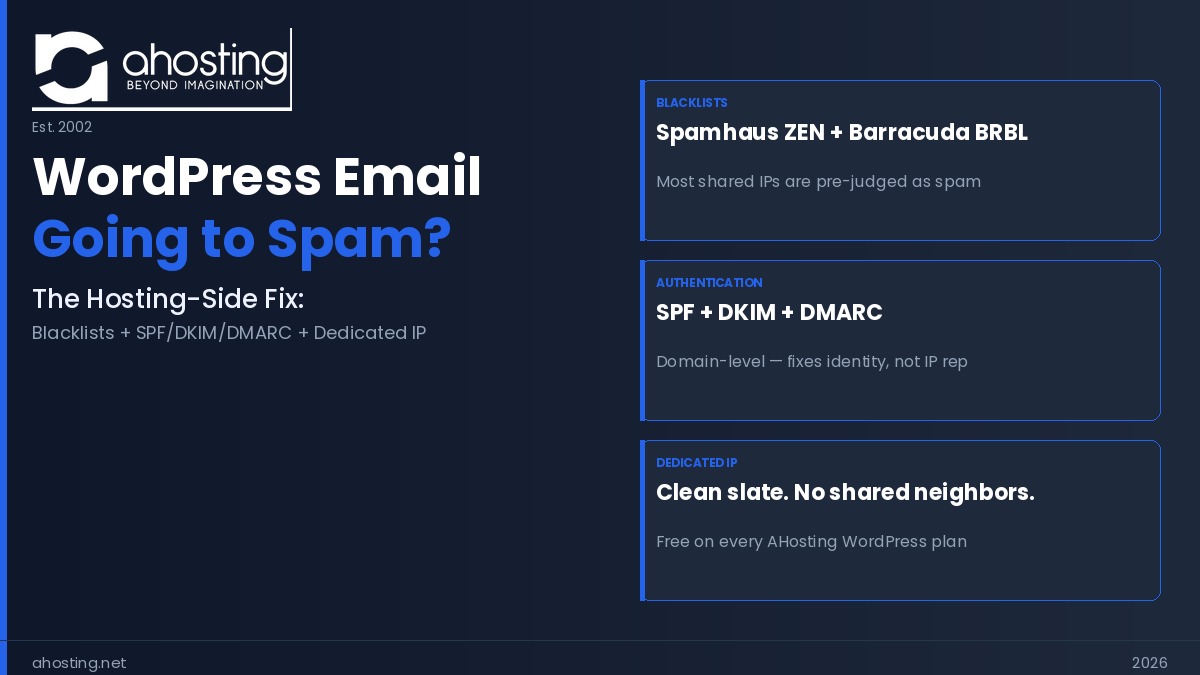
WordPress Email Going to Spam? The Hosting-Side Fixes (Dedicated IP,SPF/DKIM/DMARC, Blacklists)
TL;DRWordPress email going to spam is almost always a server-side problem — a blacklisted shared IP or missing SPF/DKIM/DMARC records. A dedicated IP eliminates the shared-neighbor blacklist risk entirely and is included free on every AHosting WordPress plan.