-

Available Disk Space Is Critically Low? What WordPress Is Really Measuring
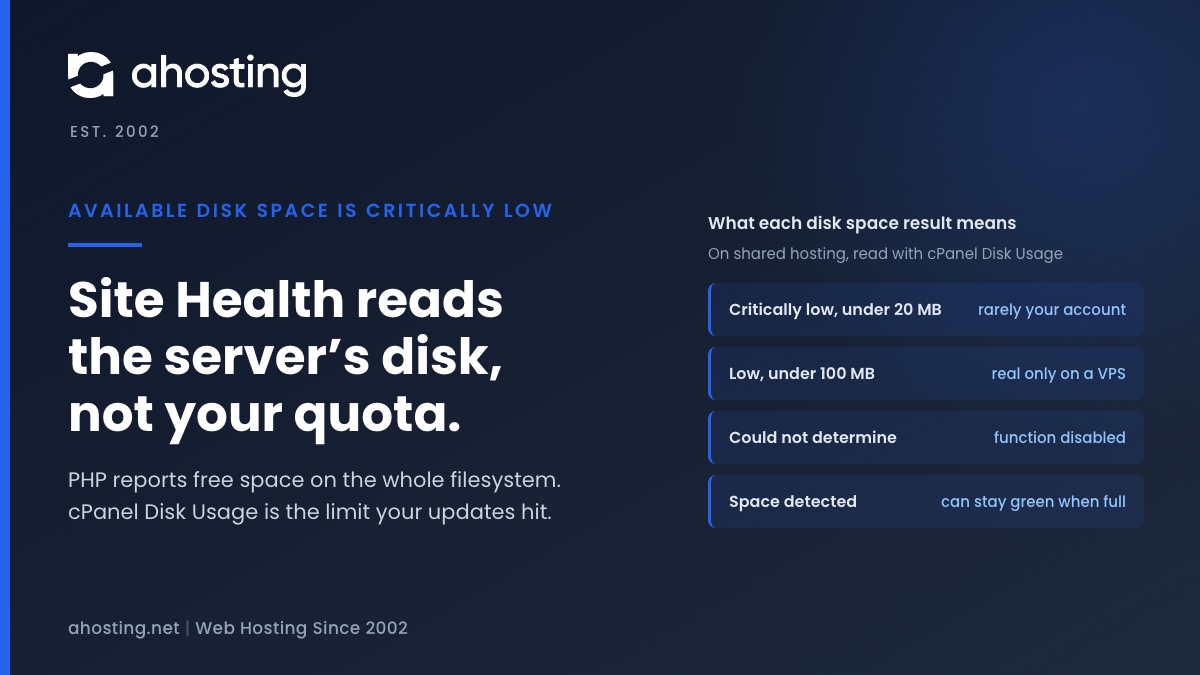
TL;DRAvailable disk space is critically low means PHP reported under 20 MB free on the filesystem that holds wp-content. On shared hosting that filesystem belongs to the whole server, not to your plan, so the warning can be wrong in either direction. Read the Disk Usage meter in cPanel instead. Near its limit: clear old backups, logs and unused plugins before updating. Plenty of room: the warning is a measuring problem, not a full site.
Categories
- CMS
- Concrete5
- Drupal
- FFmpeg / Video Hosting
- Hosting Guides
- How To
- Joomla
- Security
- SEO
- Uncategorized
- Video Content
- Web Hosting News
- WooCommerce
- WordPress
Lets Connect!
-
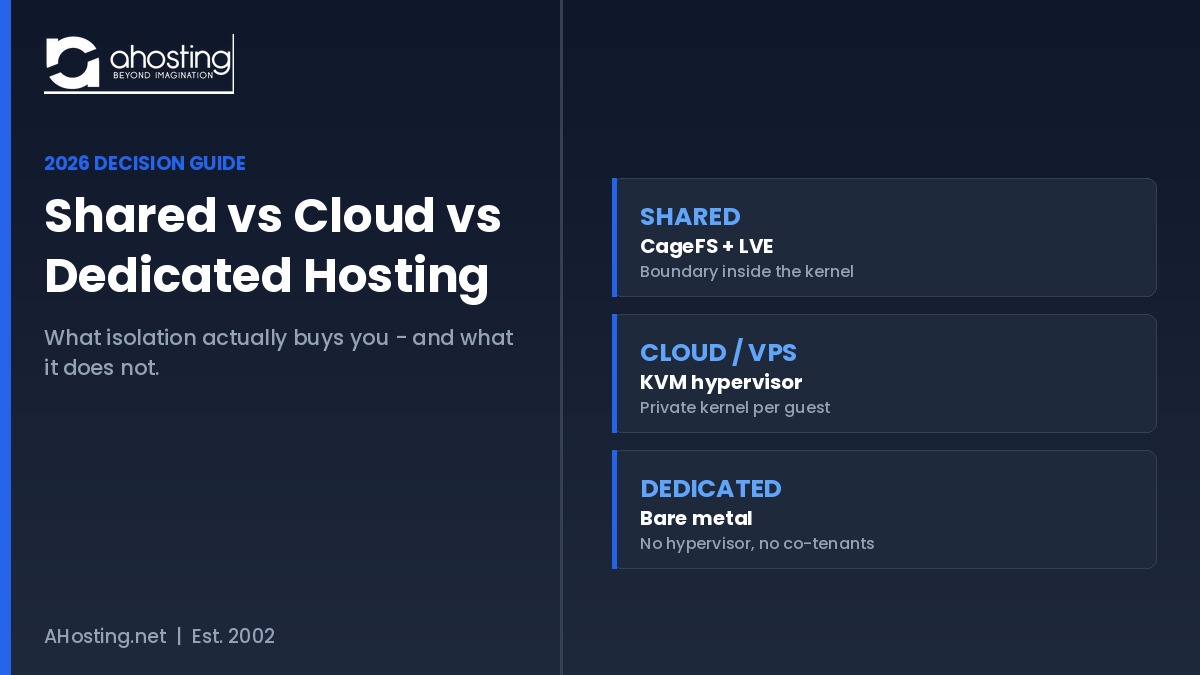
Shared vs Cloud vs Dedicated Hosting: What Isolation Actually Buys You (2026)
TL;DRChoosing between shared vs cloud vs dedicated hosting is a resource isolation decision, not a speed decision. Each tier draws its boundary in a different place, and that boundary decides what a bad neighbor can do to you.
-
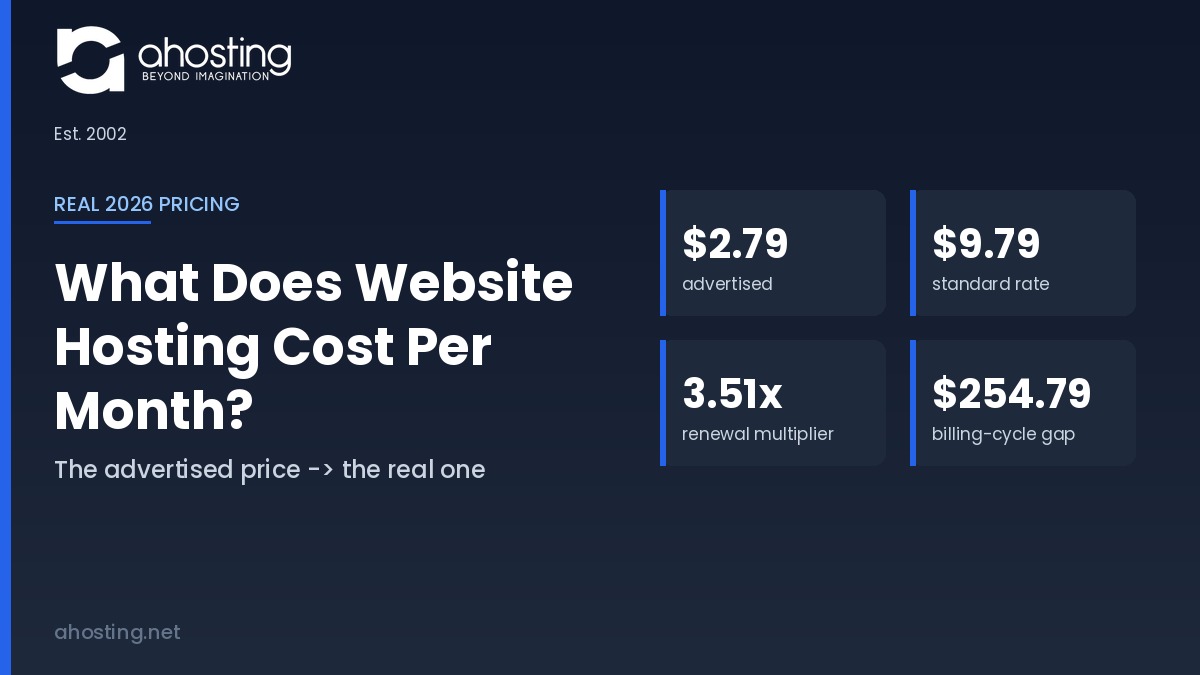
What Does Website Hosting Cost Per Month? Real 2026 Pricing
TL;DRAdvertised website hosting cost per month starts near $2.79, but that price requires a three-year prepayment. Standard rates run $9.79 to $13.79 on shared hosting. Billing cycle, not plan tier, drives the biggest difference.
-
How to Push WordPress Staging to Live Without Losing Data
TL;DRTo push WordPress staging to live without data loss, exclude the tables production wrote to since you cloned — users, comments, and every WooCommerce order table for your storage mode — then push files and settings only.
-
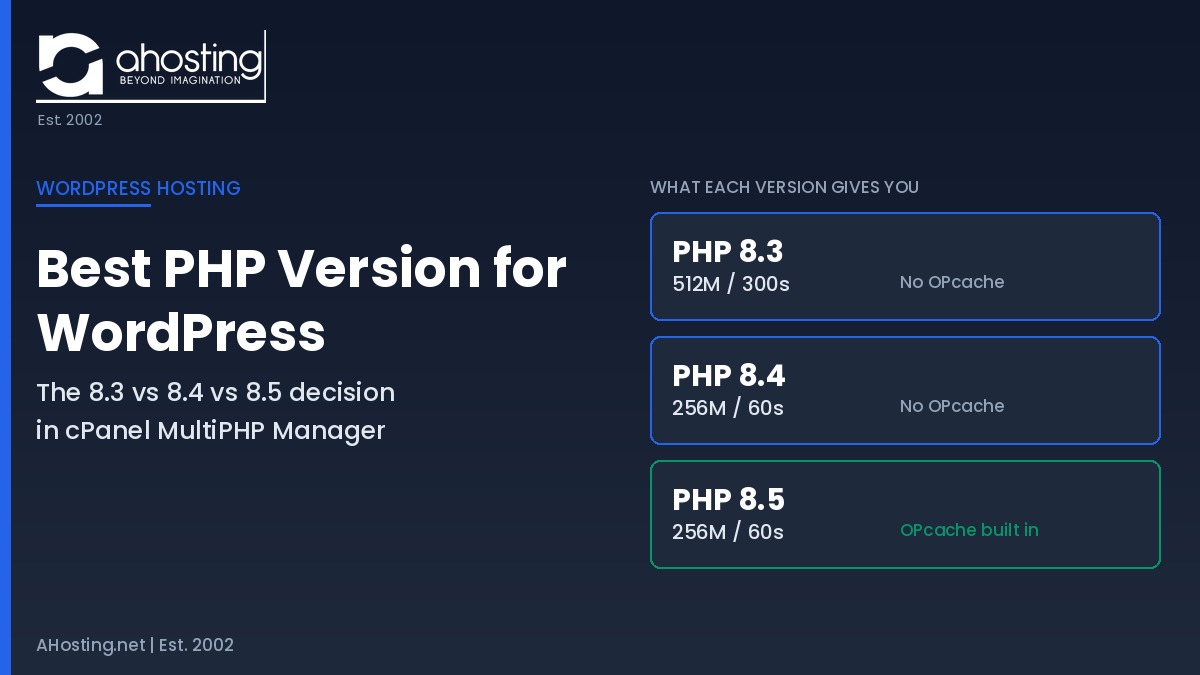
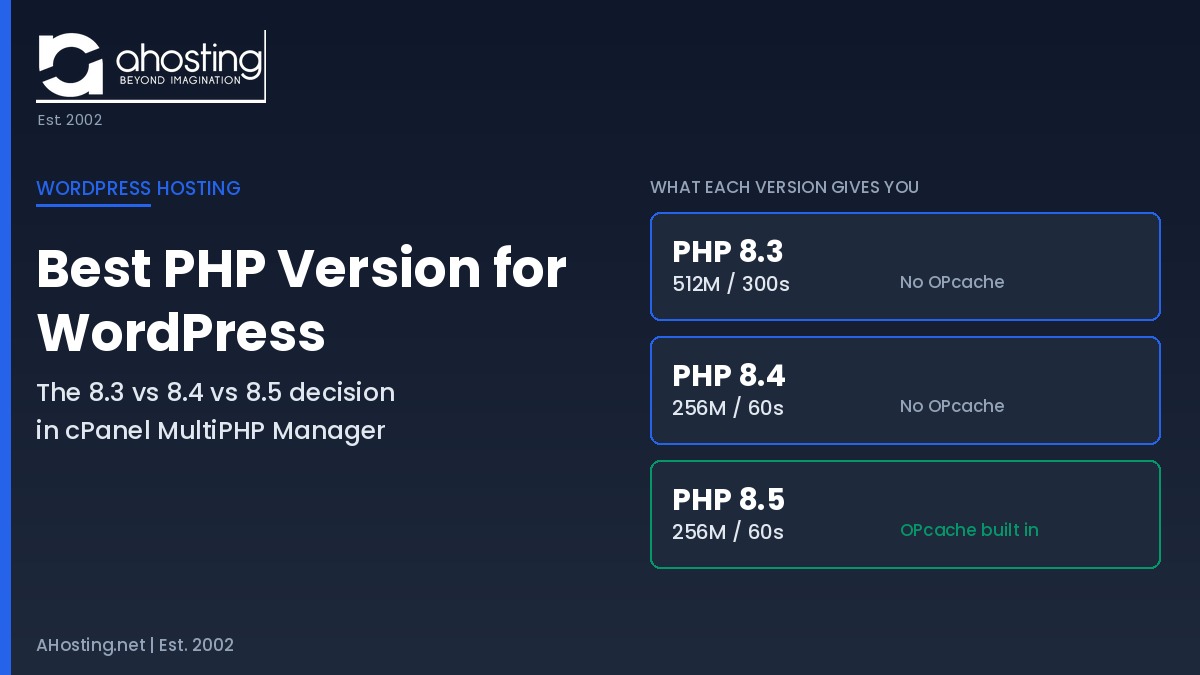
Best PHP Version for WordPress: The 8.3 vs 8.4 vs 8.5 Decision in cPanel
TL;DRThe best PHP version for WordPress in 2026 is PHP 8.3 for compatibility or PHP 8.5 for speed. On AHosting, each version also sets a different memory limit and timeout.