-

Available Disk Space Is Critically Low? What WordPress Is Really Measuring
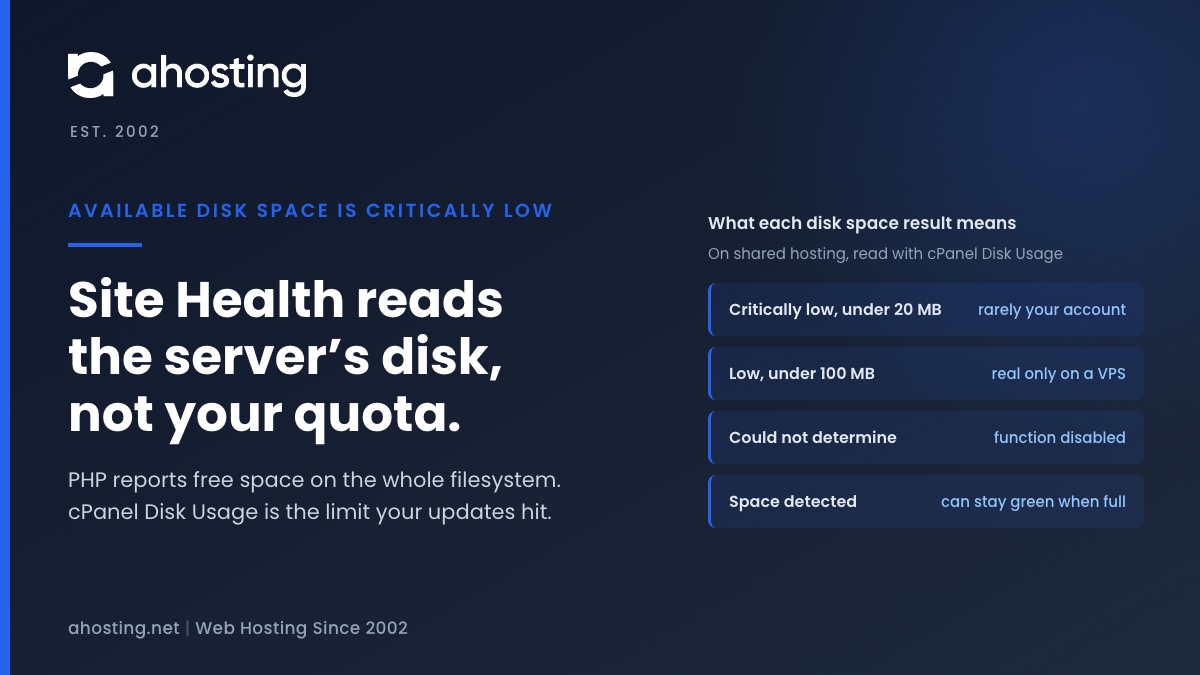
TL;DRAvailable disk space is critically low means PHP reported under 20 MB free on the filesystem that holds wp-content. On shared hosting that filesystem belongs to the whole server, not to your plan, so the warning can be wrong in either direction. Read the Disk Usage meter in cPanel instead. Near its limit: clear old backups, logs and unused plugins before updating. Plenty of room: the warning is a measuring problem, not a full site.
Categories
- CMS
- Concrete5
- Drupal
- FFmpeg / Video Hosting
- Hosting Guides
- How To
- Joomla
- Security
- SEO
- Uncategorized
- Video Content
- Web Hosting News
- WooCommerce
- WordPress
Lets Connect!
-
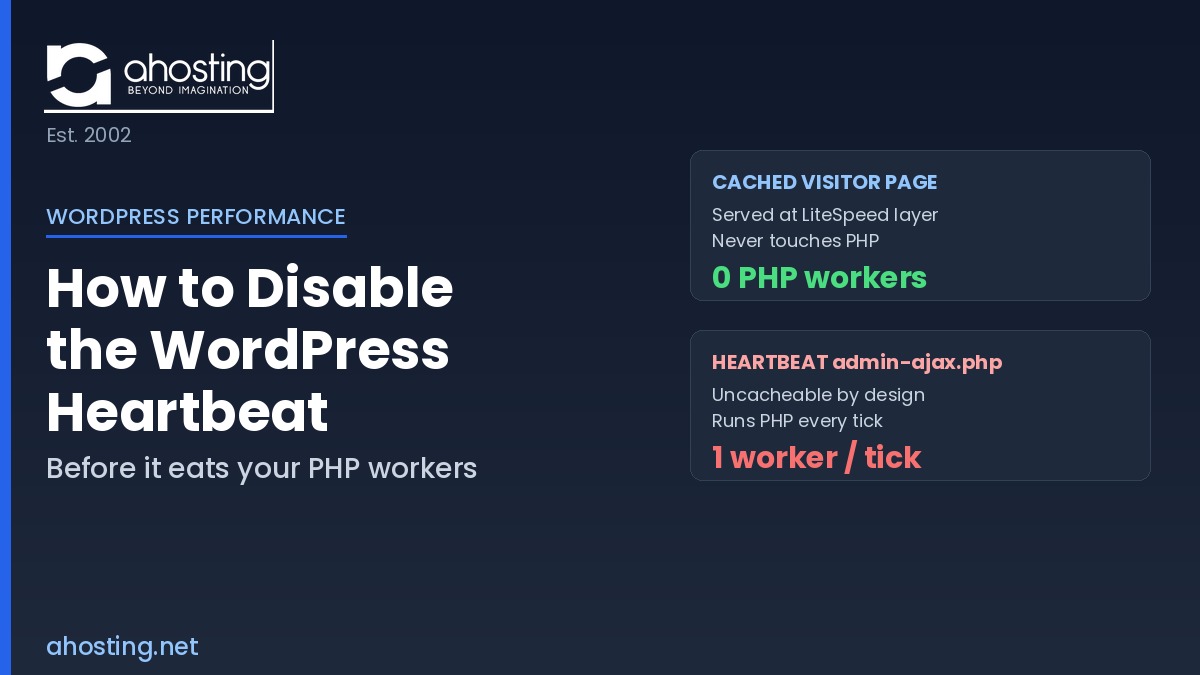
How to Disable the WordPress Heartbeat (Before It Eats Your PHP Workers)
TL;DRTo disable WordPress Heartbeat safely, throttle its interval to 60 seconds and deregister it on the front end with one
heartbeat_settingsfilter — this cuts admin-ajax.php load about 75% while keeping autosave and post locking. -
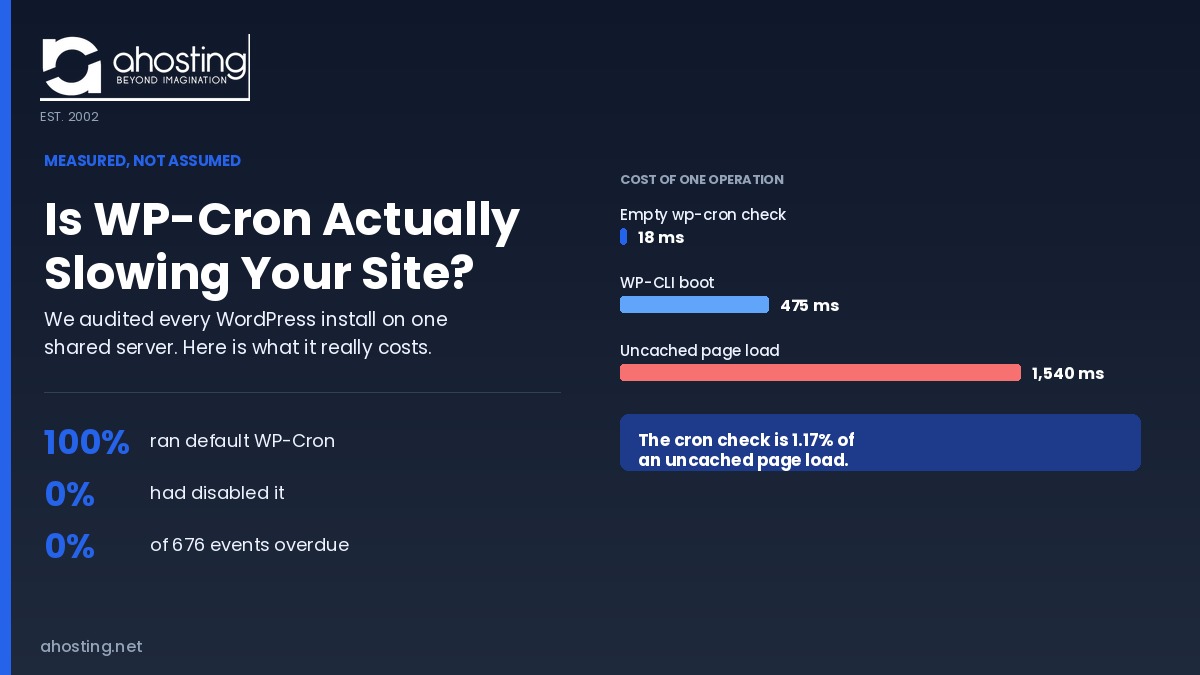
Is WP-Cron Actually Slowing Your Site?
TL;DRWe measured before telling anyone to disable wp-cron. An empty WP-Cron check costs 18 ms, just 1.17% of an uncached page load. On 100% of the WordPress installs we audited, the default was fine.
-
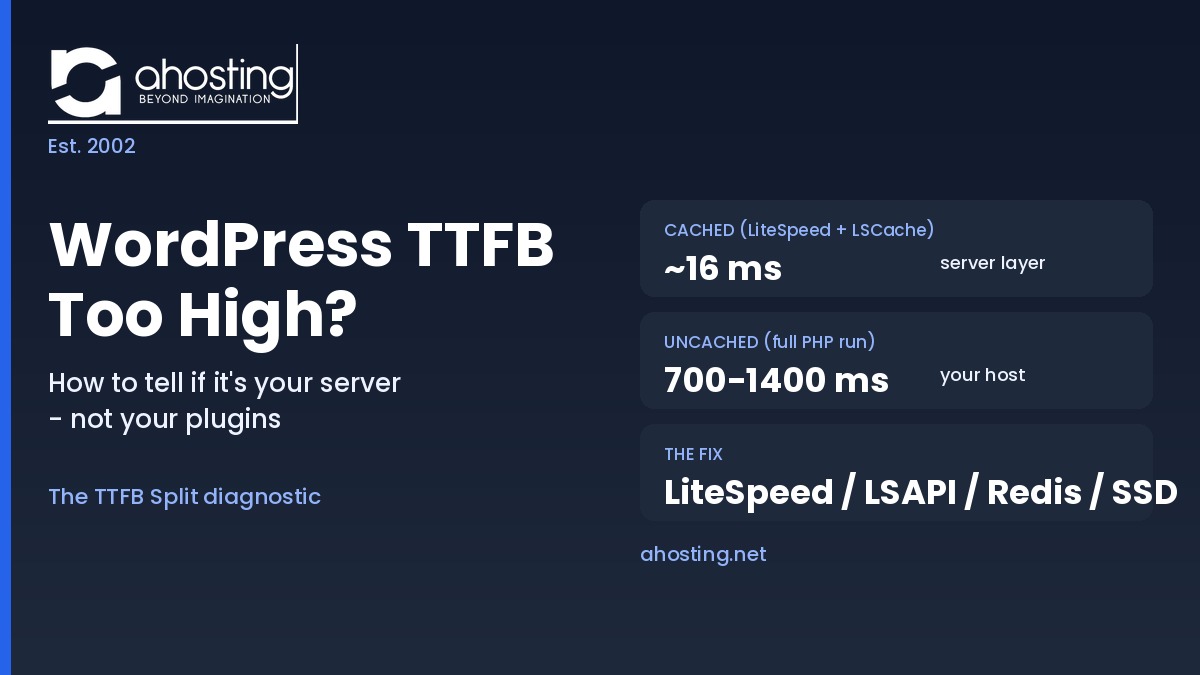
WordPress TTFB Too High? How to Tell If It’s Your Server (Not Your Plugins)
TL;DRTo reduce TTFB WordPress owners must first split the number: compare the same URL cached versus uncached. Low cached but high uncached TTFB is a server and PHP problem, not a plugin one, and LiteSpeed with LSCache fixes it at the server layer.
-
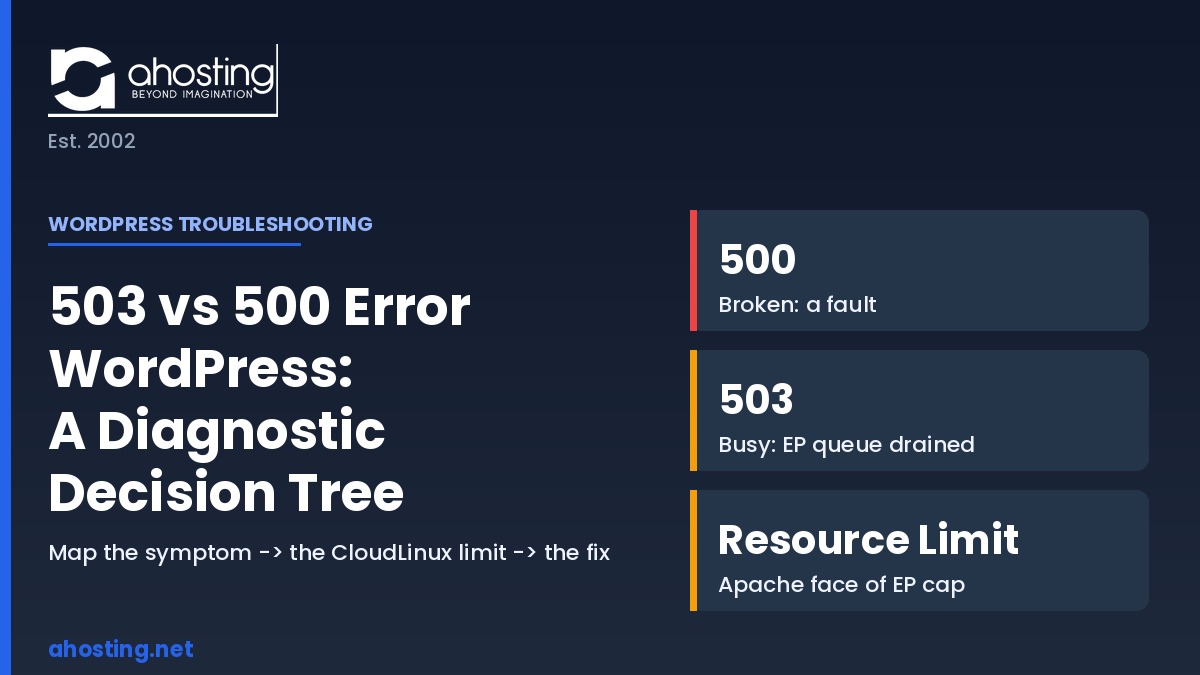
“Resource Limit Reached” vs. 503 vs. 500 Error WordPress: A Diagnostic Decision Tree
TL;DRThe 503 vs 500 error WordPress split is simple: 500 means broken (a fault), 503 means busy (a drained concurrency queue), and “Resource Limit Reached” is the entry-process ceiling. Map the symptom to the CloudLinux limit, then fix that limit.